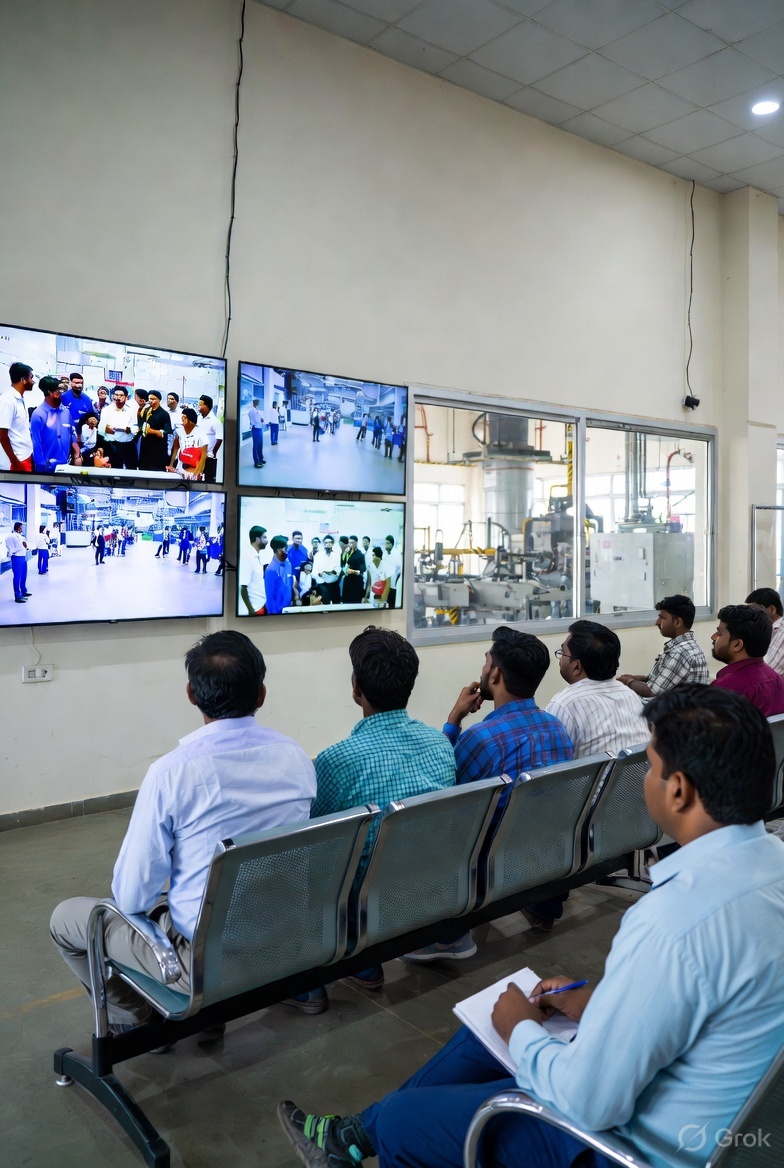
Focusing heavily on training film content (instructional videos for skills, safety, processes, compliance, and onboarding) is a highly effective, targeted way for companies in Neemrana and nearby areas (Bhiwadi, Khushkhera, etc.) to tackle labor-related and operational challenges. While it doesn’t directly solve water scarcity or power costs, it powerfully addresses skills gaps, high attrition, regulatory compliance, productivity losses, and safety issues—which are major pain points in the region.
Core Challenges Addressed by Training Films
Neemrana’s Japanese Zone and surrounding industrial areas face:
Skills shortages and labor retention — High commuting, limited local skilled workers, and turnover due to better opportunities in NCR.
Regulatory & safety compliance — Pollution norms, factory shutdown risks, and strict labor laws.
Productivity and quality issues — Inconsistent processes, especially with import-dependent or tech-heavy operations (auto, electronics, HVAC).
Onboarding and scaling hurdles — Rapid expansion under PLI/Make in India strains training capacity.
Training videos provide scalable, consistent, on-demand learning that reduces these burdens significantly.
How Heavy Focus on Training Films Helps Overcome Problems
Bridging Skills Gaps and Improving Productivity
Create short, visual modules on machine operation, quality control, Japanese management practices (e.g., 5S, Kaizen), automation, and process-specific tasks. Videos standardize training, leading to fewer errors and higher output.
In manufacturing, visual demos excel for complex gestures and procedures—reducing training time from weeks to days and enabling faster ramp-up for new hires.
Local examples: Daikin’s DJIME in Neemrana already uses skill development facilities; companies can produce in-house films for HVAC, assembly, or maintenance tailored to their plants.
Enhancing Employee Retention and Attraction
Comprehensive training signals investment in workers’ growth, boosting engagement and loyalty. Studies show trained employees are far more likely to stay, countering commuting/housing frustrations.
Videos with employee testimonials, career path visuals, and safety culture content make the company more appealing to talent from Rajasthan and NCR.
Flexible, mobile-accessible training fits shift workers and reduces frustration from poor infrastructure.
Strengthening Regulatory Compliance and Safety
Films on EHS (Environment, Health, Safety), pollution control, waste management, and statutory requirements ensure consistent adherence—reducing shutdown risks and fines.
Scenario-based or interactive videos for emergency response, chemical handling, or compliance audits build a proactive culture. This helps during inspections and aligns with Rajasthan’s skill initiatives.
Result: Fewer production halts, better eligibility for incentives under RIPS or PLI schemes.
Cost Efficiency and Scalability
One-time production of high-quality videos (in Hindi/English with subtitles) allows unlimited reuse, cutting trainer dependency and travel costs in a multi-shift environment.
Micro-learning formats (short clips) improve retention and fit busy production schedules.
Integrate with existing Rajasthan skill programs (ITIs, SDCs) or company-specific centers for blended learning.
Supporting Broader Ecosystem Goals
Share training content via industry associations (e.g., Neemrana Industries Association) for collective upskilling.
Position the company as a responsible employer for government collaborations, CSR funding, or JETRO partnerships.
High-quality training films can double as marketing assets—showcasing culture and capabilities to attract investors or clients.
Practical Strategy for Neemrana Companies
Content Priorities: Safety protocols, equipment handling, quality standards, soft skills (teamwork in Japanese-style environments), sustainability practices, and role-specific processes. Use drones, animations, real shop-floor footage, and quizzes.
Production & Delivery: Partner with local/indian video firms experienced in industrial content. Host on internal LMS, YouTube (private), or mobile apps. Update regularly for new tech/regulations.
Measurement: Track metrics like reduced defects, faster onboarding, lower turnover, and compliance audit scores. Aim for ROI through productivity gains.
Integration: Combine with on-the-job mentoring, government schemes (RSLDC, PM-SETU), and existing facilities like Daikin’s model.
Budget Tip: Start small—focus on high-impact areas like safety and core processes. Scale as revenue grows from improved efficiency.
Bottom line: A strong emphasis on training film content directly builds human capital—the biggest lever in Neemrana’s manufacturing ecosystem. It creates a virtuous cycle of better skills → higher productivity and retention → stronger compliance and competitiveness → resources to tackle infrastructure issues. Companies like Daikin are already leading here; emulating this with tailored, professional training videos can help others thrive amid structural challenges while leveraging Rajasthan’s skill development push. Pair it with advocacy through industry bodies for maximum impact.
video production company Dharuhera, video production company Sarekhurd, video production company Behror, video production company Shahjahanpur, video production company Bawal, video production company Greater Bhiwadi, video production company Khushkhera-Bhiwadi-Neemrana Investment Region (KBNIR),
Cuts & Camera Productions.
+91 7042 111 33 5
info@cutsncamera.in
w.
www.cutsncamera.com